Music Streamer Abzocke
Texte
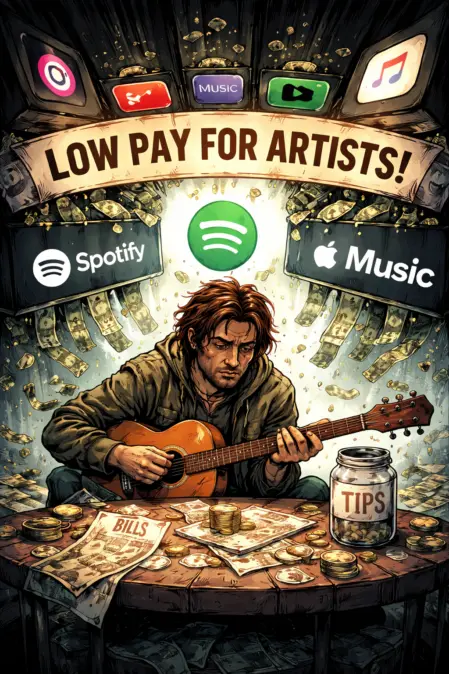
Rekordumsätze, Mini-Anteile: Warum Musiker beim Streaming noch immer unfair bezahlt, werden!
Rekordumsätze, Mini-Anteile: Warum Musiker beim Streaming noch immer unfair bezahlt, werden!
Streaming hat die Musikwelt wirtschaftlich stabilisiert, aber nicht automatisch gerechter gemacht. Spotify verweist in seinem aktuellen Bericht auf mehr als 11 Milliarden US-Dollar, die 2025 an die Musikindustrie ausgezahlt wurden. Gleichzeitig erklärt der Dienst selbst, dass weder Spotify noch andere große Streaming-Plattformen mit einem festen Betrag pro Stream arbeiten. Abgerechnet wird stattdessen nach Marktanteil am gesamten Streaming-Volumen. Das Geld fließt zunächst an Rechteinhaber wie Labels, Verlage oder Distributoren und erst danach – je nach Vertrag – an Künstler und Songwriter. Genau hier beginnt das Problem: Hohe Gesamtauszahlungen bedeuten nicht automatisch faire Einkommen für die Menschen, die die Musik machen.
Besonders umstritten ist, dass
Spotify seit April 2024 Titel mit weniger als 1.000 Streams in den vergangenen
zwölf Monaten nicht mehr in den Recorded-Royalty-Pool einbezieht. Offiziell
soll das Manipulation und Mikroauszahlungen ohne praktischen Nutzen eindämmen.
Faktisch stärkt diese Regel aber vor allem Songs, die ohnehin bereits
Reichweite haben.
Für Nischenkünstler, Newcomer und
kleinere Independent-Acts ist das ein Signal mit Sprengkraft: Wer unterhalb der
Sichtbarkeitsschwelle bleibt, fällt im Vergütungssystem schneller hinten
herunter. Diese Schlussfolgerung ist eine redaktionelle Einordnung, sie ergibt
sich jedoch direkt aus der von Spotify beschriebenen Systemlogik. Dass die Debatte längst nicht
mehr nur von Künstlern geführt wird, zeigt die Politik. Das Europäische
Parlament stellte Anfang 2024 ausdrücklich fest, dass die Erlöse im
Streamingmarkt nicht fair verteilt werden und eine Mehrheit von Autoren und
ausübenden Künstlern nur sehr geringe Vergütung erhält. Gefordert werden
transparentere Algorithmen, fairere Verteilungsmodelle und mehr Schutz
kultureller Vielfalt. Auch in Großbritannien ist das Thema inzwischen politisch
angekommen: Die Regierung verweist auf anhaltende Sorgen über niedrige
Streaming-Einnahmen und unterstützt seit 2025 neue Branchenprinzipien, die
unter anderem ältere Künstler, Songwriter und Session Musiker besser stellen
sollen.
Dass Reformen möglich sind,
zeigen erste Gegenmodelle. Deezer und Sacem haben in Frankreich 2025 ein
„artist-centric“ Vergütungsmodell für Publishing-Rechte eingeführt. Es soll
echte Künstler mit aktiver Fanbasis stärker belohnen, betrugsanfällige Mechaniken
begrenzen und funktionale Geräuschinhalte aus der Vergütungsbasis herausnehmen.
Songs von Künstlern, die monatlich mindestens 1.000 Streams von 500
verschiedenen Abonnenten erreichen, werden dabei höher gewichtet. Das ist noch
keine Lösung für die gesamte Branche, aber ein klares Signal: Selbst
Plattformen erkennen inzwischen an, dass das bisherige Streamingmodell in
seiner Verteilung nicht mehr für alle tragfähig ist.
Der eigentliche Konflikt lautet
deshalb nicht mehr, ob Streaming die Musikindustrie gerettet hat. Die
wichtigere Frage ist, wen es trägt – und wen nicht. Solange Rekordzahlen vor
allem als Branchenmeldung funktionieren, viele Musiker aber weiter von Streams
allein nicht leben können, bleibt die Kritik berechtigt. Das Problem ist nicht
nur die Höhe der Auszahlung. Es ist ein System, das Reichweite belohnt,
Abhängigkeiten verstärkt und Fairness noch immer zu oft verspricht, statt sie
zu liefern.
