Barry Redhead – a cinematographer with a cinematic eye
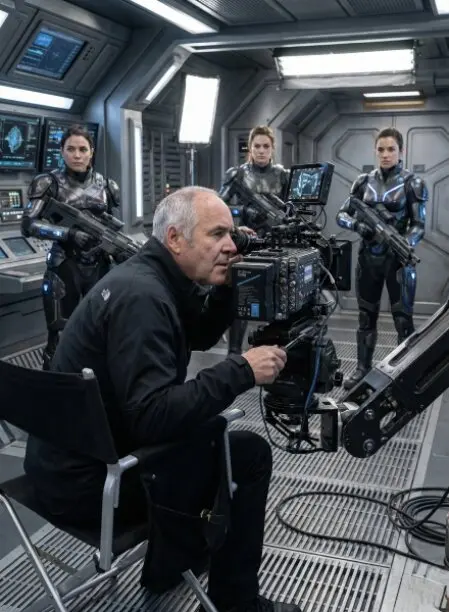
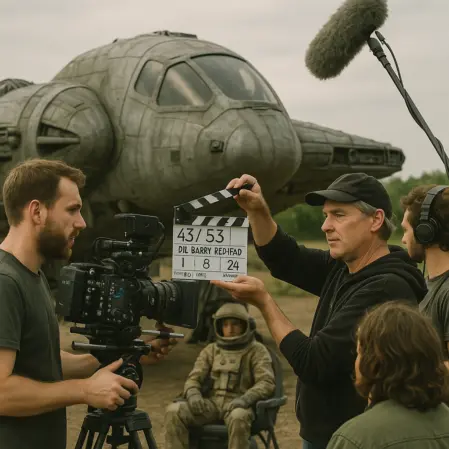
The View Through the Viewfinder ( A personal essay on seeing, sensing, and the art of the steady frame.)
My work as a corporate filmmaker has never been just a job; it has always been a passion. For decades, I’ve captured moments — first within my family, later for clients and creative projects — and I’ve never given up one essential habit: looking through the viewfinder. I still prefer it over the digital display. To look through the viewfinder means to immerse myself in the scene. I become part of the space, not merely an observer. On the tiny monitors or from the distant video village — the director’s station on set — the image feels flat, almost detached. But through the viewfinder, it comes alive.
In Los Angeles, video village was that slightly removed corner of the set where the director watched the live camera feed and ended each take with a sharp “Cut!” Even in the days of classic film cameras like the Panavision Gold (35mm), video signals could be transmitted via coaxial cable. Long before digital cameras took over, directors could already watch what the cinematographer saw through the lens. Many great directors still insist on looking through the lens themselves. They don’t just want control — they want connection. The image forms in their minds long before it appears on any screen. Some, like Christopher Nolan or Peter Jackson, have worked with the same Directors of Photography for years because they know: This person understands my vision.
The Director of Photography, or DoP, isn’t always the same as the camera operator. Often, they design the light, the composition, the depth of a scene, while another hand holds the camera. Everything depends on trust — and on budget. But even a massive budget can’t prevent bad choices. Mission: Impossible 3, a 300-million-dollar production, suffered, in my opinion, from far too much shaky camera work. I prefer to work like George Lucas or Steven Spielberg: I look through the viewfinder myself, check the framing, feel the rhythm of the scene. Not because I distrust the camera operator — but because it brings me joy. I want to know if we’re seeing the same thing. Many renowned directors — Rainer Werner Fassbinder, Christopher Nolan, Peter Jackson — worked for years with the same cinematographers because they shared a common visual language. Such quiet partnerships are invaluable. But they can also break. More than one camera operator has been replaced mid-shoot when the eye no longer aligned with the heart.
Personally, I prefer the camera on a tripod — a steady, deliberate position. It’s more labour-intensive than using a Steadicam, with its gyroscopes and graceful motion, but a still frame holds its own kind of truth. It breathes. It demands that the viewer truly look. That’s why I’m frustrated when major films drown in restless camerawork. The jittery opening of Mission: Impossible 3 threw me straight out of the story. And in series like Battlestar Galactica, shot deliberately in “documentary style,” the idea may fit the theme — but for me, it kills the magic. As a viewer, I want to be pulled into the story, not shaken out of it. I love calmness. I love clarity. Too much motion pulls me out of the illusion, makes it harder to feel with the characters. Even Hitchcock’s extreme angles in Psycho or Frenzy sometimes distance me. I side instead with Howard Hawks, whose biography is aptly titled The Camera at Eye Level. Hawks filmed at eye level — literally. His camera met people as equals, never towering above them.
I also find today’s split-screen experiments unsettling — scenes unfolding side by side, competing for attention. The moment that happens, I’m gone. We humans can’t truly process parallel events in separate spaces. This visual dissonance shatters the cinematic spell. In the end — whether film or photography — only three things matter: the subject, the scene, and the moment.
And the view through the viewfinder.