
Re-Edit
Texte
Editing Madness on Free-to-Air TV: Why Commercial Channels "Butcher" Films
Who doesn't know the feeling? You look forward to a blockbuster on television, get comfortable on the sofa, and suddenly the plot feels rushed, dialogue comes across as choppy, or the emotional depth of a moment evaporates into thin air. The reason for this is rarely a bad screenplay, but often the broadcaster's programming desk. In the world of commercial television, a film is unfortunately seldom regarded as a pure work of art; above all, it is a vehicle for advertising breaks. Here is why your favourite films so often end up under the knife.
1. The Dictate of Time Slots
Commercial broadcasters plan their evening schedules in rigid grids. A show or the news must start on the dot at 22:15. However, if a feature film has a gross running time (the film plus scheduled adverts) of 132 minutes, while only a 125-minute slot is available, the major cutting begins.
Commercial broadcasters plan their evening schedules in rigid grids. A show or the news must start on the dot at 22:15. However, if a feature film has a gross running time (the film plus scheduled adverts) of 132 minutes, while only a 125-minute slot is available, the major cutting begins.
- End credits: These are almost always the first to go, or they are shown fast-forwarded in a tiny split-screen window.
- Filler scenes: Landscape shots or long camera tracking shots are trimmed to save valuable seconds.
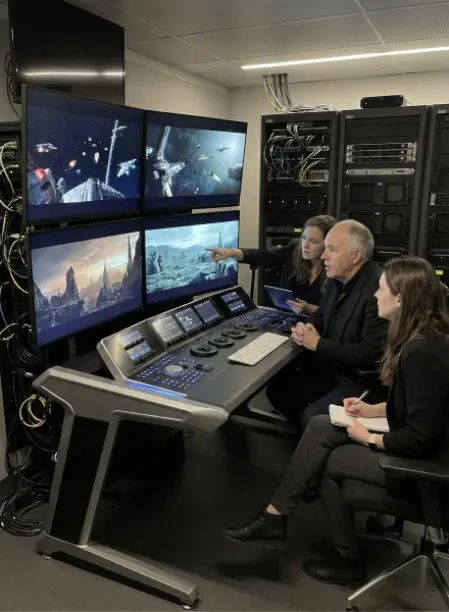
2. The Hunt for Advertising Yield
The business model of commercial broadcasters is based on advertising revenue. To create more space for commercials, content has to give way.
The business model of commercial broadcasters is based on advertising revenue. To create more space for commercials, content has to give way.
- Salami tactics: Instead of showing just three large ad breaks, films are often divided into even smaller bite-sized segments. To keep viewers hooked, the transitions into commercial breaks are frequently edited to create artificial "cliffhangers" that were never intended in the original cut.
3. Youth Protection vs. Broadcast Time
An often underestimated reason is the broadcast watershed. A film rated FSK 16 (suitable for ages 16 and over) may only be aired uncut from 22:00 onwards. However, if a broadcaster wants to show this film during prime time at 20:15, it has to take scissors to it. The result is often a mutilated work missing key peaks of violence—which sometimes causes the logic of a fight scene or the menace of an antagonist to be lost entirely.
An often underestimated reason is the broadcast watershed. A film rated FSK 16 (suitable for ages 16 and over) may only be aired uncut from 22:00 onwards. However, if a broadcaster wants to show this film during prime time at 20:15, it has to take scissors to it. The result is often a mutilated work missing key peaks of violence—which sometimes causes the logic of a fight scene or the menace of an antagonist to be lost entirely.
Why This "Ruins" the Film
A film is a composition of rhythm and pacing. When an editor intervenes on behalf of a broadcaster, they often destroy the director's vision:
A film is a composition of rhythm and pacing. When an editor intervenes on behalf of a broadcaster, they often destroy the director's vision:
- Atmosphere killers: When a quiet, emotional scene is trimmed merely to get to the next action sequence faster, the viewer loses their connection to the characters.
- Jarring cuts: As a viewer, you can often physically feel that something is missing. The audio jumps, or a character is suddenly in a different location. That pulls you completely out of the immersion.
- Misplaced adverts: A commercial break bursting right into the middle of a dramatic musical sequence destroys the artistic build-up that composers and directors painstakingly crafted.
Conclusion: The Price of "Free" Television
At the end of the day, "free" TV isn't entirely free after all—we pay for it with our patience and the quality of the viewing experience. Anyone who wants to enjoy films in their full glory, in the proper aspect ratio, and with their intended pacing can hardly avoid Blu-rays or (ad-free) streaming services.
At the end of the day, "free" TV isn't entirely free after all—we pay for it with our patience and the quality of the viewing experience. Anyone who wants to enjoy films in their full glory, in the proper aspect ratio, and with their intended pacing can hardly avoid Blu-rays or (ad-free) streaming services.